
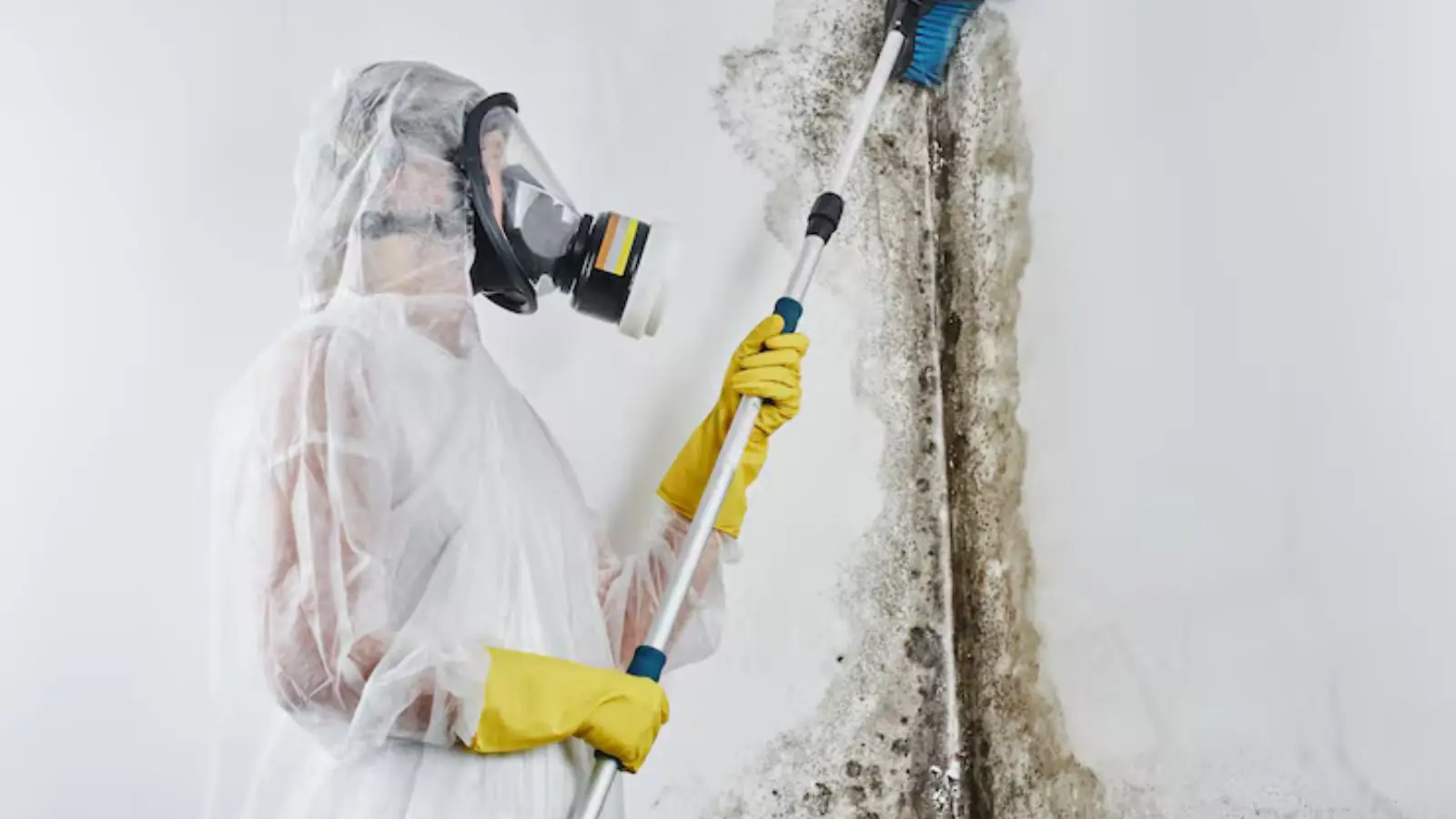
What People Mean by Black Mold Removal
When someone asks about black mold removal, they usually mean any dark growth on a wall, ceiling or floor. The phrase is a nickname, not a technical category. Dark spots can come from many different molds, and plenty of molds that look black are not the ones the nickname usually points to.
That matters because the job itself does not change much with the color. A removal crew works from the amount of growth, the material it sits on and the moisture behind it. This page explains how that work is organized and what to ask before you hire anyone.
Why Color Alone Does Not Identify a Mold
Mold color depends on species, age, the surface and the light. Growth that looks black in a dim corner may look green or gray under a flashlight. Only laboratory analysis can name a species, and a sample rarely changes what a crew does about growth you can already see.
In practice, the label changes nothing about what you do first. Visible growth means moisture is present, and moisture is the thing to chase. Questions about health effects belong with a physician, not with a color chart or an internet photo.
How a Removal Job Is Organized
Assess
The crew finds the moisture source, measures the affected area and checks adjoining rooms for hidden growth.
Contain
Plastic sheeting seals the work zone. Negative air machines with HEPA filters pull air out through a controlled path.
Remove
Porous material with growth, such as drywall, carpet and ceiling tile, is cut out, bagged and carried out sealed.
Clean
Framing and hard surfaces are cleaned with HEPA vacuums and damp wiping.
Dry and verify
The area is dried to normal moisture readings and checked before rebuilding starts.
Notice that killing mold is not on that list. The aim is physical removal and clean surfaces, followed by a dry structure. EPA does not recommend routine bleach use, and spraying a chemical over growth on porous material leaves the material in place.
Seeing dark growth and want to talk through it?
Call dispatch and describe the room and the material.
Containment Is the Part You Cannot See Afterward
Disturbed mold releases spores into the air. A sealed work zone and a filtered exhaust keep that material from drifting into bedrooms and ductwork. This is why homeowners who scrape a moldy wall and vacuum with a shop vac sometimes find a wider mess a week later.
Our mold remediation service page walks through containment and air filtration in more detail. If the growth followed a leak or storm, the drying side of the job is covered under water damage cleanup.
S520 and What a Published Standard Gives You
ANSI/IICRC S520 is a published industry standard for mold remediation. It describes conditions, containment practices and documentation. S500 is the companion standard for water damage. Standards are guidance documents, so the useful question for a contractor is simply whether the work follows S520 and how that will be documented.
| What you see | Typical path |
|---|---|
| A few small spots on a sealed hard surface | Careful cleaning after the leak is repaired |
| Patch near 10 square feet or more | Professional assessment and containment |
| Growth inside a wall cavity | Professional opening, removal and drying |
| Return after past cleaning | Find the unresolved water source first |
| Sewage or flood water involved | Professional handling, since category 3 water needs it |
Wheat Ridge Local Note: Licensing and Who You Hire
Wheat Ridge asks contractors doing paid work on private property to hold a city license. The Building Division at 303-235-2855 can say how that applies to your job. The city does not publish on this page which license class covers restoration, so ask the division directly.
Separately, ask whether your state licenses mold work. Rules differ from state to state, and a good company will answer plainly. Homeowners in neighboring cities can compare notes on the Arvada and Denver pages, since local building departments handle permits their own way.
Questions to Ask Before You Hire
Who does the work
Ask whether the crew is employed by the company or subcontracted, and who supervises on site.
Scope in writing
Ask for the areas, the materials to be removed and the containment plan on paper.
Standards
Ask if the company works to S520 and what documentation you receive.
Licensing
Ask for the city contractor license and whether the state licenses mold work.
Moisture
Ask how the water source will be found and who fixes it.
Clearance
Ask whether an independent third party can verify the result.
A company that will not put the scope in writing, or that promises a result before seeing the room, deserves another look. Verify that insurance paperwork is the company's own and not yours to supply.
Ask your insurer what your policy covers before work begins, and keep photos of the area before anything is removed. Claim questions can go to the state insurance consumer line at 303-894-7490.
Black Mold Removal FAQs for Wheat Ridge
Does Wheat Ridge require a license for black mold removal?
Start with the city: the Building Division, at 303-235-2855, can confirm whether a contractor license applies. Then ask whether your state licenses mold work.
Is black mold a different job from other mold?
The method is largely the same. Crews plan around the area, the material and the moisture, not the color. Color alone cannot identify a species, and a visible patch usually gets the same response either way.
What is S520?
ANSI/IICRC S520 is a published industry standard for mold remediation. It covers practices such as containment and documentation. You can ask any contractor whether the work follows it.
Can I remove a small patch myself?
Under roughly 10 square feet on a hard surface, EPA guidance allows many homeowners to clean it with protective gear once the water source is fixed. Larger or hidden growth belongs to professionals.