
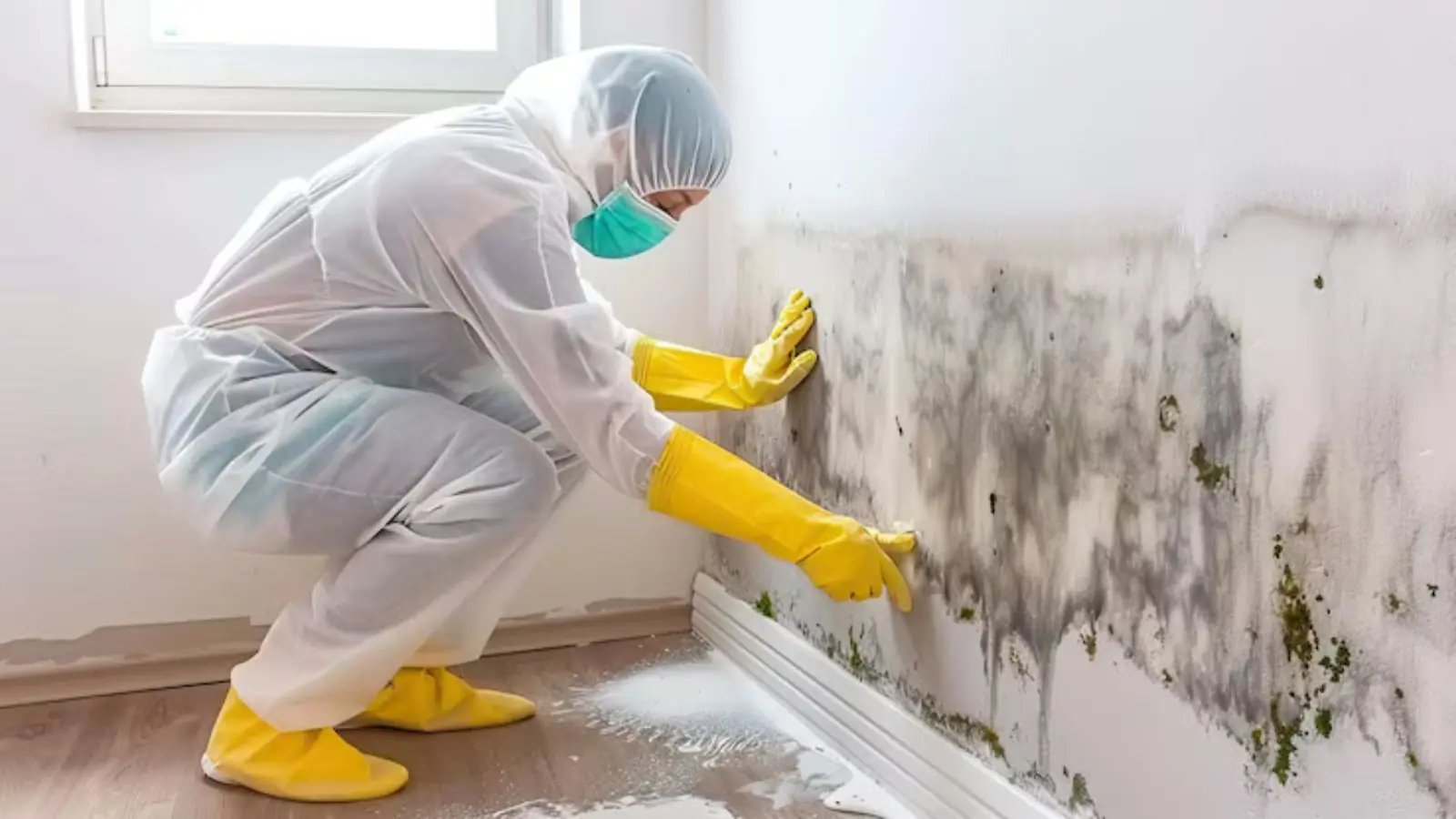
Mold Remediation in Wheat Ridge Starts With Moisture
Mold remediation in Wheat Ridge is the containment and removal of mold growth, plus fixing the moisture that fed it. Mold needs water, so every job begins with finding the leak, condensation or humidity source. The published industry standard for mold remediation is ANSI/IICRC S520, and you can ask any company whether its crews work to it.
This is a planned service, not usually an emergency, though the first call is welcome at any hour. Inspections depend on the schedule, and a fixed arrival time is not promised. Questions about health effects belong with a physician.
A Dark Spot, a Musty Smell or a Stain After a Leak
People search for what they see: black spots in a bathroom corner, a damp smell in a basement, or a ceiling stain that keeps coming back. Those are the signs that bring callers to remediation. In most calls the mold follows a leak from a toilet, a sink, an air conditioner condensate line or a roof.
The first fix is the leak. Cleaning mold off a surface that stays damp only invites it back. After the source is stopped, the affected material is assessed, and what cannot be cleaned is removed.
Mold After Water Damage
Mold often follows an unfinished drying job. Materials still wet after the roughly two day drying window the EPA describes can host growth inside wall cavities, under flooring and above ceilings. If you had water damage weeks ago and the area still smells, ask for an inspection.
If the water is recent, start with water mitigation so the structure dries before mold gets a start. If drying was done and growth is still visible, remediation is the next step.
Seeing mold and want it looked at?
Call and describe what you see and where.
How Remediation Works
Inspect
Visible growth is mapped and moisture readings locate the source.
Contain
The work area is sealed with barriers and air is filtered with HEPA equipment.
Remove
Affected porous material is removed and surfaces are cleaned.
Verify
The area is checked and, if you want proof, independent testing confirms the result.
Containment keeps spores from spreading to clean rooms. Negative air pulls air out through HEPA filters so the workspace stays under lower pressure than the rest of the home. Workers wear protective gear, and affected materials are bagged before leaving the containment.
Mold Removal and Black Mold Cleanup
Color does not tell you whether mold is dangerous. The EPA says that in most cases, if visible mold growth is present, sampling is unnecessary, and that there are no federal limits set for mold or mold spores. Treat any growth the same way: fix the moisture and remove the material.
Small areas can sometimes be handled by the homeowner. The EPA says that if the moldy area is less than about 10 square feet, most people can do the cleanup themselves following its guidelines. Larger areas, and any water damage from sewage or contaminated water, call for a professional.
Bleach is not the answer. The EPA says bleach use is not recommended as a routine practice during mold cleanup, and it warns never to mix chlorine bleach with ammonia products. Dead mold must still be removed, because it can cause allergic reactions.
Inspection, Testing and Clearance
An inspection looks for growth, moisture and the source. Testing is a separate question. The EPA notes that surface sampling may help confirm an area was adequately cleaned, and that it should be done by professionals.
If a buyer, lender or landlord requires proof the mold was removed, ask for independent clearance testing from a third party who did not do the remediation. Independent testing is a factual record, and we cannot promise how a lender will treat it. Ask your lender what it requires.
Colorado rules matter here. Ask whether your state licenses mold work, and ask the City of Wheat Ridge Building Division at 303-235-2855 whether any permit applies to the repair.
Choices When Mold Is Found
| Situation | Common approach | Notes |
|---|---|---|
| Small surface growth on hard material, dry source fixed | Clean and dry | EPA guidance allows homeowner cleanup under about 10 square feet |
| Growth on drywall or insulation | Remove and replace | Porous material cannot be cleaned reliably |
| Growth in several rooms or after sewage | Professional containment | The EPA calls for a professional for larger problems |
| Hidden mold suspected | Inspection first | Investigating hidden mold requires caution |
What Affects the Cost of Mold Remediation
Area affected
More square footage and more rooms require more containment.
Materials involved
Drywall and insulation are removed, while hard surfaces are cleaned.
Moisture source
Fixing the leak or humidity source is a separate trade and a separate cost.
Containment and air filtration
Barriers and HEPA equipment are set per work area.
Testing
Independent clearance testing is a separate service by a third party.
Rebuild
Replacing removed drywall and finishes follows remediation.
Mold coverage varies widely between policies, so ask your insurer before work begins. After removal, water damage repair rebuilds what was taken out.
What to Do While You Wait for an Inspection
- Do not scrub, sand or brush visible growth, since that spreads material.
- Keep the fan off and the area closed off from the rest of the home.
- Stop the moisture source if you can do so safely.
- Photograph the area and note where and when the water occurred.
- Wear an N95 respirator and gloves if you must enter the room.
Mold Remediation FAQs
How do I know if it is mold?
Visible spots, a musty odor and a history of moisture are the usual signs. If you are unsure, an inspection can identify growth and the moisture source. Questions about health effects belong with a physician.
Should I test the mold first?
The EPA says that if visible mold is present, sampling is usually unnecessary. Testing can be useful to confirm cleanup afterward or for a sale or loan.
Can you provide independent clearance testing?
Independent clearance testing is done by a third party who did not do the remediation. We can help you coordinate the timing, and your lender or buyer decides what it will accept.
How much notice do you need for an inspection?
Call and give the address. Inspections are booked by availability and a visit can sometimes happen the same day. No fixed arrival time is promised.
Is basement mold common in Wheat Ridge?
Basements collect moisture from runoff, leaks and humidity, so mold shows up there often. Check the FEMA flood map for your address and see our flood damage restoration page for water entry points. Ask whether your state licenses mold work before hiring.