
Water Mitigation in Wheat Ridge Happens in the First Hours
Water mitigation in Wheat Ridge is the work done in the first 24 to 72 hours to stop damage from growing: shutting off the source, removing standing water, mapping moisture and starting structural drying. It is separate from rebuilding, which comes later. Dispatch is answered 24/7, and meanwhile you can stop a leaking supply line at the main valve.
The urgency is real. Mold guidance from the EPA allows about two days to dry wet materials, which is why mitigation is the stage where speed pays off most.
A Wet Wall, Soaked Carpet and a Musty Smell: What Mitigation Is
Most people do not search for mitigation. They search for a wet wall, a soaked carpet or a smell that appeared after a leak. Mitigation is the trade name for what fixes those problems: finding where the water went, removing what cannot dry, and drying what can with controlled equipment.
If you see staining, bubbling paint, warped baseboards or a damp odor, ask for mitigation before repair. Painting over a wet wall hides the problem without drying it.
When Mitigation Is an Emergency
Call right away if water is still flowing, if it soaked more than one room, or if it reached insulation or a finished basement. Each hour lets moisture move into more material. Crews go out in call order, and a fixed arrival time is never promised.
Stay out of water that may be contaminated. If gas or electricity is involved, the utility or 911 comes first.
What Happens During Mitigation
Source control
The leak or entry point is stopped so water is not added while drying is underway.
Extraction
Standing water and saturated material are removed before air movement begins.
Moisture mapping
Meters and thermal imaging show what is wet inside walls, floors and ceilings.
Drying setup
Air movers and dehumidifiers are placed to match the room and the readings.
Moisture mapping is the step that separates a controlled job from a guess. Thermal imaging shows temperature differences that suggest damp areas, and meters confirm the moisture content in drywall, wood and concrete. Readings are logged and repeated on later visits.
Wet walls or floors right now?
Call dispatch and we will explain what to do first.
Structural Drying
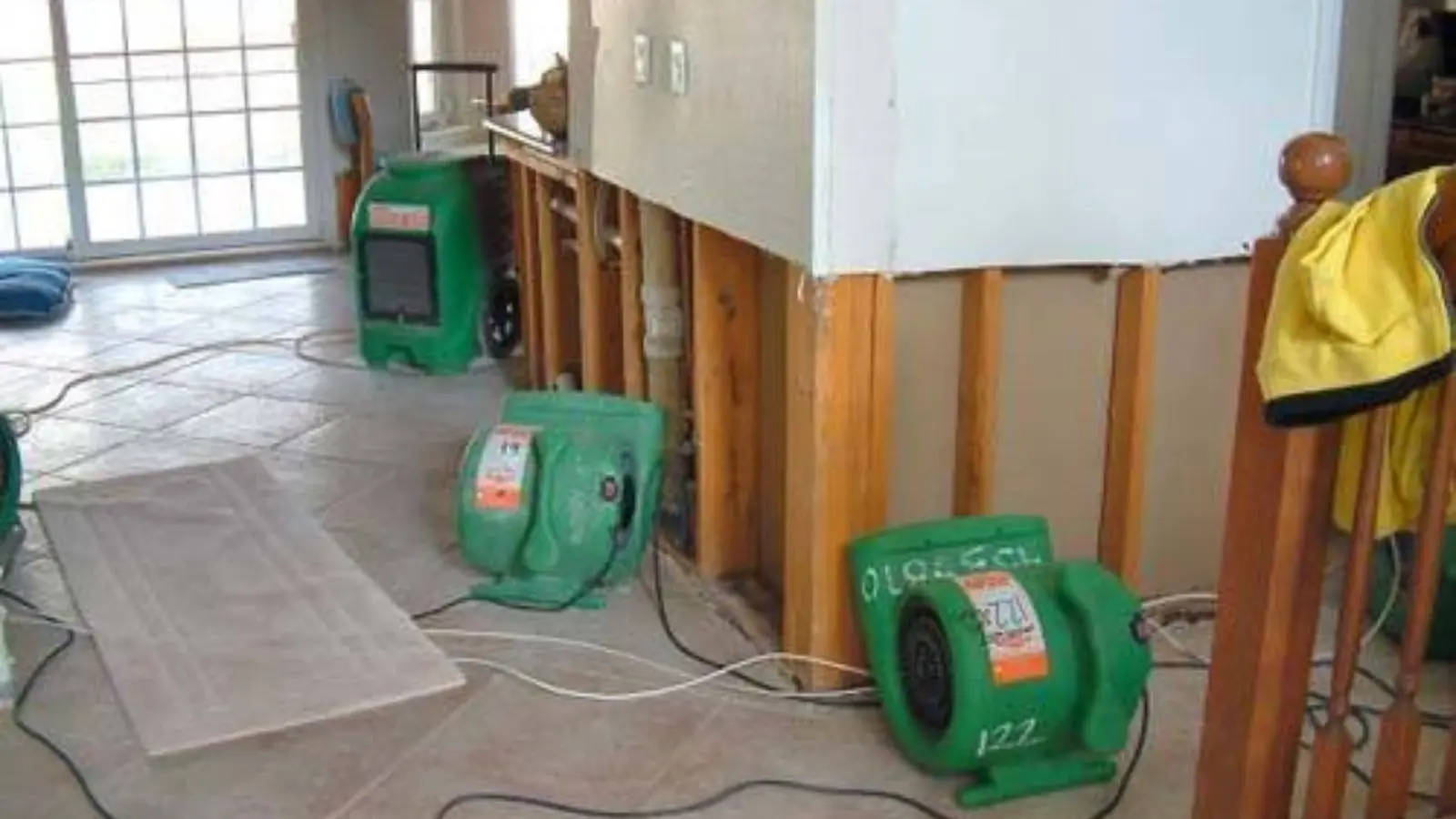
Structural drying is the part of mitigation that removes moisture from framing, subfloors, concrete and wall cavities. Air movers push dry air across wet surfaces. Dehumidifiers pull moisture out of the air so the water has somewhere to go. LGR and desiccant units handle different humidity conditions.
Drying time depends on the materials and the water, and the readings tell us when it is finished. Equipment stays until wet material reaches normal range and stays there. If you want to know the plan, ask for the drying log and the target readings.
In some cases, holes are made in walls or toe-kicks so air can reach a closed cavity. That is a controlled opening, not demolition, and it is patched during the repair phase. Where material is too saturated or contaminated to dry, it is removed instead.
A furnace running alone is not enough to dry a wall cavity that took water, and an open window does not control where the moisture goes. Equipment placed to match the readings does.
Dry, Remove or Repair: The Mitigation Decision
| Condition | Likely decision | Why |
|---|---|---|
| Clean water, caught early, drywall firm | Dry in place | The material has not been compromised |
| Drywall soft or bubbling | Remove and replace | Paper facing and gypsum lose strength when wet |
| Wet insulation | Remove | It holds water and dries slowly |
| Gray or contaminated water | Remove porous material | Contamination cannot be dried out |
| Concrete and framing | Dry with equipment | These materials dry and are checked with meters |
After mitigation the work moves to water damage cleanup if debris or contamination remains, or to water damage repair when the structure reads dry. If water is still standing, emergency water removal comes first.
What Affects the Cost of Mitigation
Water category
Gray or contaminated water adds removal and sanitizing steps.
Affected area
More rooms and more square footage mean more equipment.
Materials
Hardwood, concrete and framing dry at different speeds.
Drying days
Equipment count and monitoring visits scale with how long drying takes.
Time since the loss
Older losses have spread further into the structure.
Rebuild scope
Repairs are priced after drying is finished.
Mitigation records matter for claims. We log readings and photos, your insurer decides coverage, and the Division of Insurance advises limiting further damage and getting your insurer's instructions before repairs. No coverage is promised.
The Reference Standard for Drying
Professional drying follows ANSI/IICRC S500, the published standard for water damage restoration. It sets the vocabulary used here, including water categories and drying goals. We name it as an industry standard, and we do not claim a certification by doing so. A written drying log you can read is a fair thing to ask for.
Water Mitigation FAQs
Do you handle water mitigation emergencies at night or on weekends in Wheat Ridge?
Yes. Mitigation calls are answered at every hour. Crews go out in call order and arrival times are not guaranteed.
What is the difference between mitigation and restoration?
Mitigation is the first stage that stops the damage and dries the structure. Restoration is the overall process that includes cleanup and repair afterward.
How long will drying equipment stay in my home?
It stays until readings reach normal range. The time depends on the materials and the water, and we log readings so you can see progress instead of taking a guess.
What do the air movers and dehumidifiers actually do?
Air movers speed evaporation by moving air across wet surfaces. Dehumidifiers remove the moisture from the air so surfaces keep drying. Together they dry the structure without opening every wall.
Can I rent drying equipment instead?
We do not offer equipment rental. Renting without moisture readings often leaves hidden moisture in place, so we recommend a professional scope.