
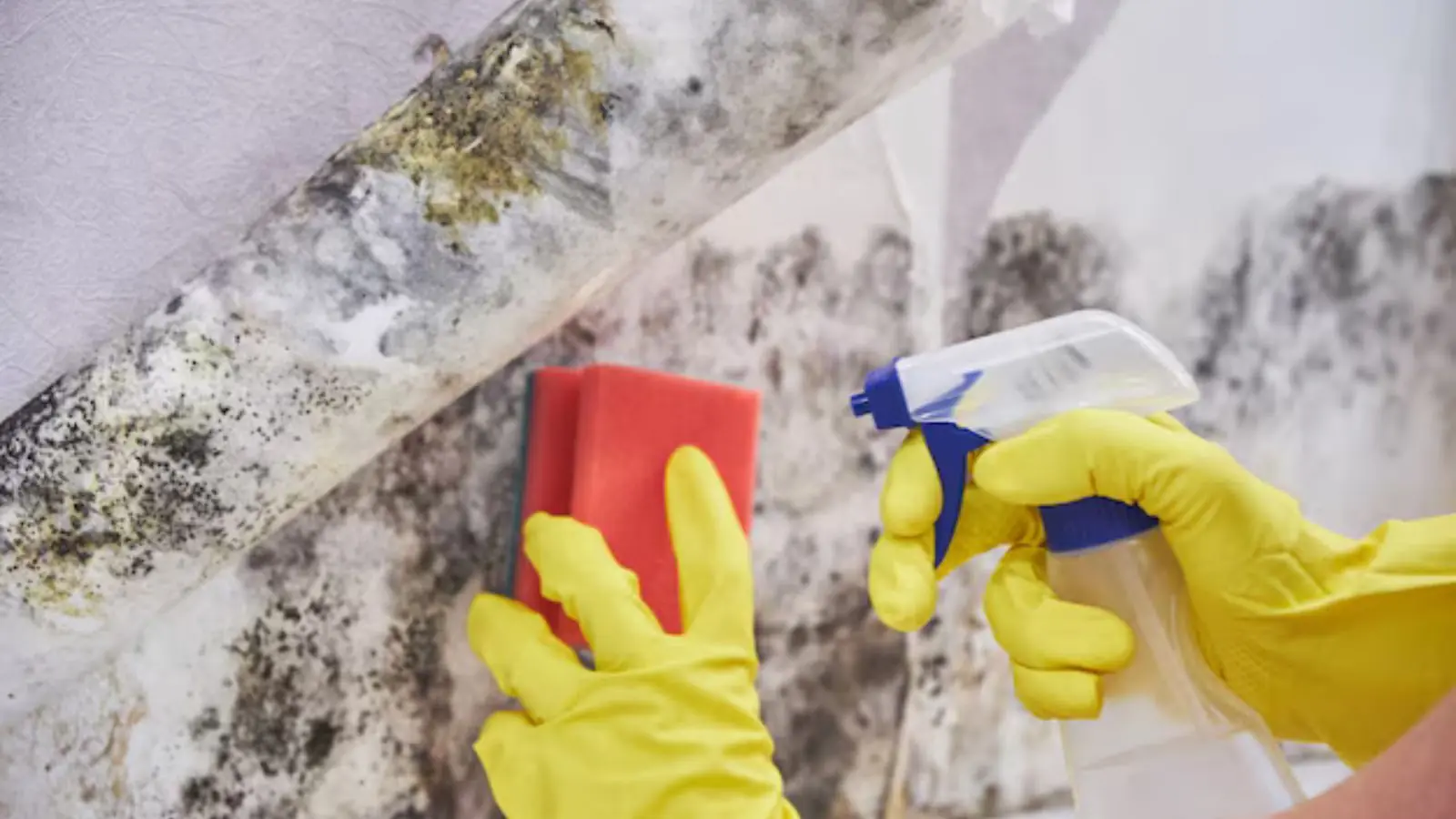
Small Patch, Hands-On Cleanup: What Is Reasonable
Some basement mold is a small, visible patch on a hard surface after a minor, fixed leak. That kind of job is within reach of a careful homeowner. This page covers the hands-on part: gear, method, what to throw out and what to leave alone.
Everything here assumes the water source has already been found and stopped. Cleaning without drying is wasted effort, because growth returns wherever the surface stays damp.
Size Is the First Decision
EPA guidance draws a rough line at about 10 square feet, which is a patch roughly three feet by three feet. Under that, homeowners can generally follow the agency's cleanup steps themselves. Over it, or if the problem is in the air handling system, the guidance leans toward a professional.
Measure with a tape and write it down. People tend to underestimate, and a number on paper keeps you honest. If it is close to the line, treat it as over.
Protective Gear and Setup
Respirator
An N95 or better fitted respirator. A loose paper dust mask does not seal.
Gloves
Long rubber or nitrile gloves that cover the wrists.
Eye protection
Goggles without open vents, so spray and debris stay out.
Clothing
Old long sleeves and pants you can wash hot or discard.
Air
Open a window and run a fan blowing outward. Close off the doorway to the rest of the house.
Bags
Heavy contractor bags for debris, sealed before they leave the room.
Do not use the furnace or any central fan during cleanup. It can carry dust into every room.
Hard Surfaces Versus Porous Ones
| Material | What to do |
|---|---|
| Sealed concrete, tile, glass, metal | Scrub with detergent and water, rinse with a damp cloth, dry fully |
| Finished wood, painted surfaces | Scrub gently, wipe, dry, then confirm the finish is intact |
| Unfinished wood and studs | Scrub or sand lightly with protection, or have a pro assess |
| Drywall with growth | Cut out and discard, usually with the insulation behind it |
| Carpet and pad | Discard, since porous material holds growth below the surface |
| Ceiling tile, cardboard, paper | Discard |
The principle is this. On a hard surface, growth sits on top and can be removed. In a porous material it reaches inside, so cleaning the face does not clear it. EPA guidance says porous materials with growth are often discarded.
Growth bigger than you expected?
Call dispatch before you disturb it further.
A Cleanup Sequence That Keeps Spores Down
Wet the area lightly
A damp surface sheds less dust than a dry one. Do not soak it.
Scrub with detergent
Use a stiff brush with plain detergent and water. Work in one direction, rinsing the brush often.
Wipe and rinse
Use disposable cloths, and bag them as you finish.
Dry fast
Run a dehumidifier and a fan until the surface is dry to the touch and the air feels normal.
Bag and remove
Seal debris in two layers and carry it out directly, not through the house if you can avoid it.
Allow a day, then look again. If the mark has returned, the surface was not dry or the source was not fixed. Go back to the water problem rather than cleaning a third time.
What to Avoid
- Do not dry-brush or sweep growth. That throws it into the air.
- Do not paint or caulk over a patch and call it done. Coatings trap moisture and hide the problem.
- Do not mix bleach with ammonia or other cleaners. The fumes are hazardous, and EPA guidance does not recommend bleach as routine mold cleanup.
- Do not use a leaf blower, household vacuum or ordinary shop vacuum. A true HEPA vacuum is the correct tool for any dust.
- Do not scrub a patch that is part of a wet wall. Open and dry the wall first.
Sampling is usually unnecessary when growth is visible. Money spent on testing before cleanup is better spent on fixing moisture. Questions about how mold affects any person belong with a physician.
When Cleaning Is the Wrong Job
Stop and call if the growth is larger than the 10 square foot guide, if it is inside a wall, if water came from a sewer or flood, or if a musty smell persists after you have cleaned. Our mold remediation service uses containment and HEPA air filtration, and our water damage cleanup page explains what happens when the water was the larger problem.
Wheat Ridge Local Note: Sump Water, Sewers and Your Basement Neighbors
If your basement stays wet because a sump pump runs often, know where it discharges. In Arvada, a sump discharging to the sanitary sewer is prohibited, and the homeowner owns the service line. That rule is a good reminder to point the discharge outdoors and away from the foundation, wherever you live.
In northwest Wheat Ridge, the Fruitdale Sanitation District serves the area from Ward Road to Kipling Street and 44th to 52nd Avenue, with wastewater treated by Metro Wastewater Reclamation District. Ask your city building department where your own sewer connection and sump rules stand. Related reading is available for Arvada and Golden homeowners.
Basement Mold Cleaning FAQs for Wheat Ridge
Is the Fruitdale district relevant to basement cleanup in Wheat Ridge?
Only if sewage is involved. In the northwest part of the city, Fruitdale Sanitation District handles sewers. Sewage water is category 3 and needs professional handling, not a bucket and brush.
Can I clean a small patch on concrete myself?
Often yes, if it is under about 10 square feet and the leak is repaired. Wear a fitted respirator, gloves and goggles, scrub with detergent, and dry the surface fully.
Should I use bleach on basement mold?
EPA guidance does not recommend routine bleach use. Detergent and water, plus drying, do the work. Never combine bleach with ammonia.
What should I throw out after a basement leak?
Porous items with growth, such as carpet, pad, ceiling tile, cardboard and soft drywall. Hard items can usually be cleaned and dried.