
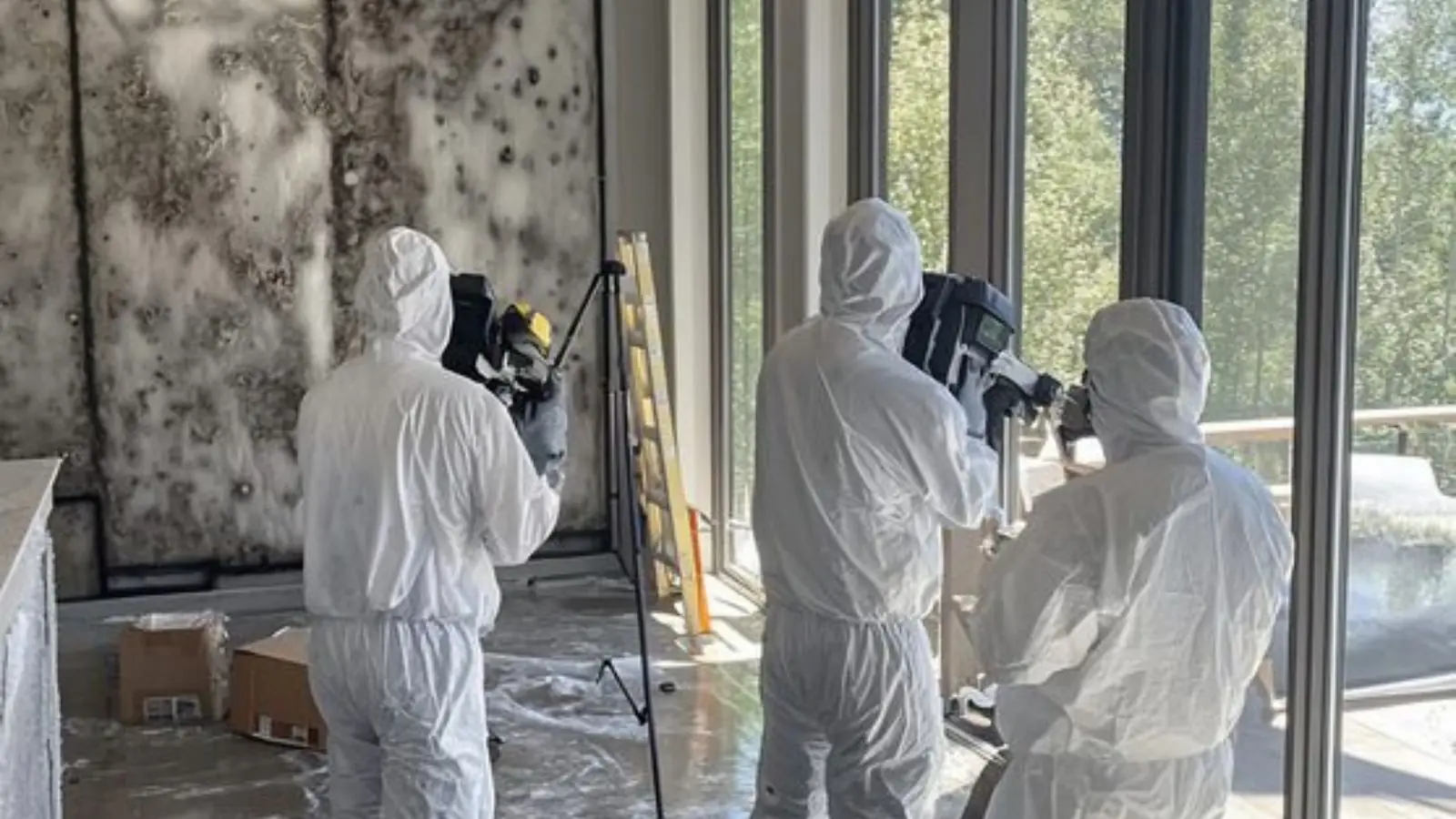
Mold in a Building Other People Use
Mold in a house is a family problem. Mold in an office, shop, restaurant or apartment building is also a scheduling, communication and record-keeping problem. Owners and managers have to think about who occupies the space, who pays for what, and what the paperwork will need to show afterward.
This page is for owners, landlords and property managers who suspect growth in a commercial or multi-tenant building in the Wheat Ridge area. It is a planning guide. Our site has no dedicated commercial page, so the practical first step is simple: call and describe the building.
Why the First Call Goes to a Restoration Company
Mold almost always has a water story behind it. A roof leak, a failed supply line, a clogged condensate drain or a flooded mechanical room supplies the moisture. If a restoration crew sees the building first, it can address the water and the growth together instead of sending you from one trade to the next.
Describe the building, the rooms affected, how long the area has been damp and whether the space is occupied. Those four details tell dispatch what kind of visit makes sense.
Responsible for a building with suspected mold?
Call dispatch and describe the building.
Working Around Occupied Spaces
Containment is what makes work possible while people are still using the building. Plastic barriers and filtered air machines isolate the work zone, and the mechanical system serving that zone is typically closed off from the rest of the building. Mold remediation covers how that sealed zone is built.
Walk the space
Identify the affected area, the water source and the occupied rooms nearby.
Plan the zone
Decide where barriers go, how workers enter and exit, and where waste leaves the building.
Schedule around use
Place loud or dusty tasks outside business hours when the space allows it.
Document and close
Record photos, readings and the scope of work for the property file.
Ask whether a given company can work at night or on weekends, since needs differ widely from one building to the next. Do not assume it. Ask and get the answer in writing.
Communicating With Tenants in General Terms
Tenants and staff will notice barriers, equipment and noise. Short, factual notices work better than silence. State where the work is, roughly when it will happen and whom to call with questions. Avoid guessing about causes or health effects, because speculation spreads faster than facts.
What to say
The location of the work, the approximate dates and a contact name for questions.
What not to say
Predictions about cause, blame or health outcomes.
Health questions
Send them to a physician. Mold-related health questions are outside what a contractor can answer.
Lease terms
Check your lease and local landlord rules, and consult an attorney for legal obligations.
Wheat Ridge Local Note: Renters, Owners and Licensing
Census figures put owner-occupancy in Wheat Ridge at 54.4 percent, which means a large share of the housing and many of the buildings are rented. If you manage rentals here, expect to deal with a tenant, a landlord and sometimes a separate insurer in the same project.
For owners hiring out repairs, the city licenses contractors doing paid work, so the Building Division at 303-235-2855 is the place to confirm requirements. Whether the state licenses mold work is a separate question to put to any company you consider. If your portfolio crosses city lines, the Denver and Arvada pages show how nearby jurisdictions handle service.
Mixed-use buildings add another wrinkle. A restaurant below an apartment, or a salon beside a storage unit, may share walls, plumbing stacks and air paths. Growth in one unit can trace to a leak in another, so the walkthrough should cover neighbors on every side, above and below the affected space.
Records That Protect the Owner
Good documentation makes later conversations with insurers, tenants and buyers easier. Before any removal, photograph the area. After the work, ask for a written scope, moisture readings and any third-party clearance results. Keep invoices with the property file.
| Item | Why it matters |
|---|---|
| Dated photos before work | Shows the condition and extent before removal |
| Written scope of work | Defines areas, materials removed and containment |
| Moisture readings over time | Shows the structure returned to normal |
| Standard followed (S520 or S500) | Names the published standard referenced |
| Independent clearance result | Gives a third-party view of the finished space |
| Tenant notices sent | Records what was communicated and when |
S520 and S500 are published industry standards, so referencing them in a work order is reasonable. Ask any company to explain how its practices relate to them.
Insurance questions should go to your insurer. Ask what your commercial policy covers, whether business interruption applies and what documents they want to see. Do not assume anything is covered.
Commercial Mold Removal FAQs for Wheat Ridge
Do Wheat Ridge landlords need a licensed contractor for mold work?
Yes. Ask each bidder about a city contractor license, confirm with the Building Division, and ask whether your state licenses mold work.
Can work happen while the building stays open?
Often partly, because containment separates the work zone from occupied areas. The answer depends on the size, the air handling and the layout. Describe the building when you call.
Who should I call first about suspected mold in a rental building?
Start with a restoration company, since the moisture source usually decides the plan. Then notify your insurer and give tenants a short factual notice about the work.