
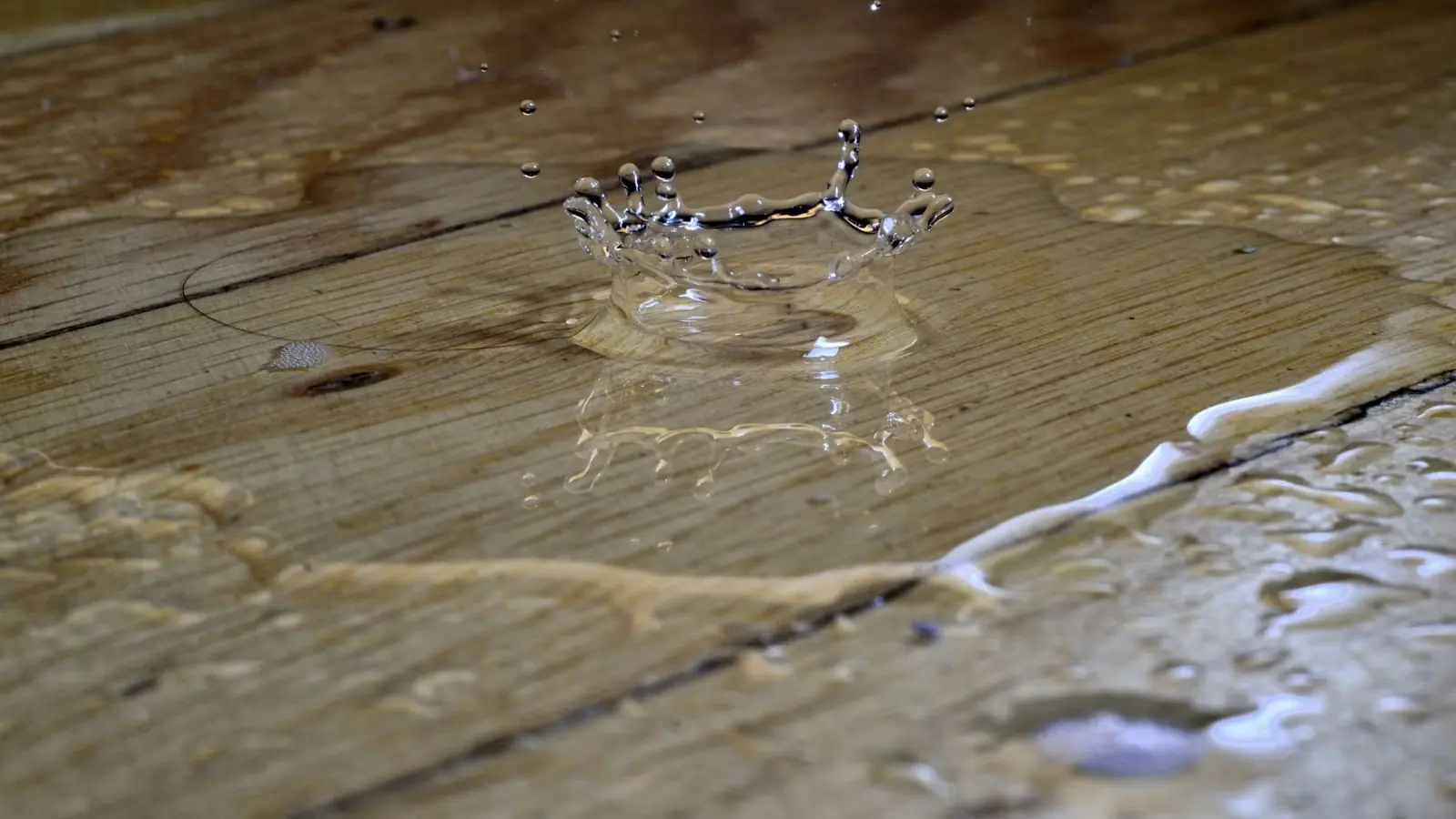
Wood Is Forgiving, Up to a Point
Wood takes on water slowly and gives it back slowly, which is good news. A board that got wet and dried quickly often returns to normal with nothing more than time and airflow. The trouble starts when wet wood stays wet, because that is when it swells, warps, stains and starts to rot.
So the question is rarely whether wood can be fixed. It is whether this particular piece, in this particular spot, dried fast enough and stayed sound enough to keep. The sections below sort wood by what it is and what the water did to it.
What Water Does to Wood
Swelling
Fibers absorb water and expand. Boards push against each other and the edges lift.
Cupping and crowning
Uneven moisture bends boards into a dish or a hump. Many recover as they dry evenly.
Staining
Tannins and dirt carried by the water leave dark marks, often at joints and nail holes.
Softening and rot
Wood that stays wet for long periods loses strength and breaks down.
Finish failure
Varnish whitens or peels, and glue joints in furniture let go.
Surface growth
Damp wood can grow mold on the surface within days if drying lags.
Most of these can be reversed early and none can be reversed late. That is why the first two days decide so much, a point EPA mold guidance makes about wet building materials in general.
Hardwood and Engineered Floors
Solid hardwood is the most repairable flooring because it can be sanded and refinished more than once. Engineered boards have a thinner top layer and a plywood core, which swells and does not always recover. Laminate with a fiberboard core usually does not survive standing water.
Resist the urge to sand a cupped floor right away. Boards that are still wet will flatten as they dry, and sanding too early leaves ridges once they shrink back. Dry the floor, wait for stable moisture readings, then judge whether it needs sanding, board replacement or full removal. Our water mitigation page explains how drying is measured.
Floor cupping or boards lifting?
Call dispatch and describe the flooring and how long it has been wet.
Trim, Doors and Cabinets
Baseboard and door casing sit right where water collects, so they are the first wood to show damage. Painted trim that is lightly swollen can often be pulled, dried and reinstalled, which keeps old profiles that are hard to match. Trim that has softened or split is cheap to replace.
Cabinets are a mixed case. Solid wood face frames dry well. Particleboard boxes and shelves swell and crumble, and the toe kick area usually goes first. Remove the kick plate to let air reach the cavity under the cabinet, since water often hides there.
Furniture and Antiques
Move it out of the wet
Lift pieces onto blocks or take them to a dry room right away.
Wipe and air dry slowly
Blot the surface and let it dry in a ventilated room, away from direct heat.
Open drawers and doors
Pull them out so moisture can leave from every side.
Hold off on repairs
Wait until the wood is fully dry before regluing joints or refinishing.
Do not set a wet piece next to a heater or in direct sun. Rapid drying splits veneer and cracks solid wood. A piece with sentimental value or real age deserves a conservator, not a home refinishing kit.
Framing: Joists, Studs and Subfloor
Structural wood is the one place where the call is not about looks. Framing that got wet briefly and dried to normal readings is generally sound. Framing that stayed wet long enough to darken, soften or smell sour needs an inspection. A screwdriver that sinks easily into a joist is a sign the wood has lost strength.
Subfloor sheathing is plywood or oriented strand board, and the second type swells hard at the edges. If sections have delaminated, they are cut out and replaced. Our water damage repair page covers how those patches are tied into existing framing.
Wheat Ridge Local Note: Older Wood in Older Homes
Wheat Ridge has older homes worth protecting. The Baugh House at 11361 W 44th Avenue is one local landmark, and the Wheat Ridge Historical Society, founded in 1974, works to keep the city's history visible.
Older homes often contain original lumber, trim and flooring that is hard to replace in kind, so dry and save what you can before choosing a substitute. If your home is historic, ask your city building department what applies before removing original material.
Keep or Replace: A Quick Guide
| Wood type | Often kept | Often replaced |
|---|---|---|
| Solid hardwood floor | Dried fast, mild cupping | Black staining, rot or soft boards |
| Engineered or laminate | Rarely, only light surface exposure | Core swelling or edge lifting |
| Trim and casing | Painted, lightly swollen | Split, soft or crumbling |
| Cabinets | Solid wood frames | Particleboard boxes and shelves |
| Joists and studs | Dried to normal readings | Soft, dark or sour smelling |
If the water was sewage or came from a flood, wood that soaked it up is treated differently. See Denver or Golden pages for neighboring service areas, and ask a professional before reusing any porous wood.
Water Damaged Wood FAQs for Wheat Ridge
Should I save original wood trim in an older Wheat Ridge house?
If it is sound, yes. Original trim is often hard to match. Pull it carefully, dry it flat and reinstall it. Replace only pieces that are soft or split, and ask your city about rules for historic homes.
Will a cupped hardwood floor flatten on its own?
Often, once it dries evenly. Give it time and stable moisture readings before sanding. Sanding while the boards are wet leaves ridges when they shrink back.
Can I remove water stains from wood?
Light surface stains sometimes lift with sanding. Dark stains that run deep, especially at joints, may need board replacement. Test in a hidden spot first.
How do I check if framing is still sound?
Probe it with a screwdriver. If it sinks in easily, or the wood looks dark and smells sour, have a professional inspect it. Dry, firm framing at normal moisture readings is usually fine.