
The Whole Job in One Pass
Water damage remediation follows a fixed order, and the order exists for a reason. Each stage prepares the ground for the next, so skipping ahead tends to cost more time later. This guide follows a typical job from the first phone call to the last coat of paint, in the sequence a crew would work it.
Your house will not need every stage. A small appliance leak may skip containment entirely, while a sewage backup uses all of them. Knowing the full list helps you spot what a crew has left out and ask why.
Stage 1: The Call and the Questions
A good first call is mostly questions. Where is the water coming from, has it been shut off, which rooms are wet, how long has it been wet and is anyone in the house unable to stay there. The answers decide what equipment and protective gear get loaded before a truck leaves.
While you wait, stay out of rooms with standing water if electrical outlets or appliances are submerged. Shut off the main water valve if a supply line is the source, and photograph everything before moving it.
Stage 2: Safety and Water Category
Before any work begins, the crew classifies the water. The industry uses three categories, and the category sets the whole plan.
| Category | Typical source | What it means for the job |
|---|---|---|
| 1 (clean) | Broken supply line, overflowing sink with clean water | Dry in place where possible, standard handling |
| 2 (gray) | Washing machine or dishwasher discharge, aquarium | Cleaning and more removal of porous material |
| 3 (black) | Sewage, river or creek water, long standing water | Professional handling with protective gear and heavy removal |
Category 3 needs professional handling. Clean water can also degrade into a worse category if it sits, which is another reason the clock matters. These terms are published in the S500 water damage standard, which you can ask any company about.
Unsure which category your water falls into?
Call dispatch and describe the source and how long it has sat.
Stage 3: Extraction and Removal
Pull standing water
Pumps and extractors remove bulk water from floors, carpet and low areas first.
Check hidden pockets
Moisture meters and thermal cameras find water behind walls and under floors.
Remove what cannot dry
Saturated pad, soft drywall and wet insulation are cut out and bagged.
Protect what can stay
Furniture is blocked up, contents moved and clean areas covered.
Removal is the stage people resist most, because cutting into a wall feels like adding damage. In practice, opening the wall is what lets air reach wet framing. Materials that can be dried are kept, and materials that hold contamination or have fallen apart are not. Our emergency water removal page covers extraction in more depth.
Stage 4: Drying and Monitoring
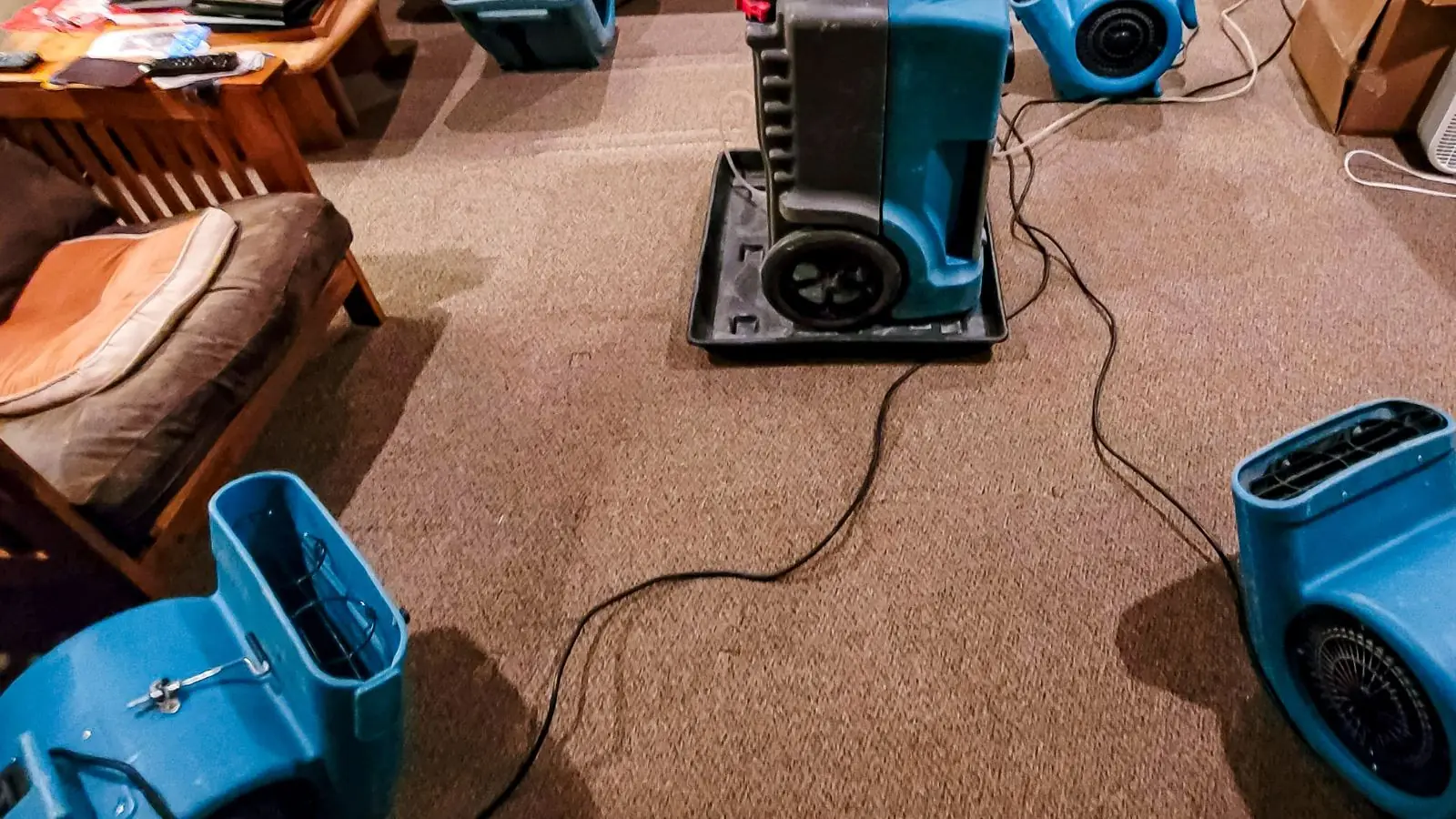
Drying is where the project is won or lost. Air movers push dry air across wet surfaces, dehumidifiers pull moisture out of the room and crews log readings each visit. The goal is to match the readings of an unaffected area, not to run machines for a set number of days.
Expect return visits. A tech comes back to move equipment, check meters and decide when the structure is dry. If no one measures, no one knows. Read more on how this works on the water mitigation page.
Stage 5: Cleaning and Treatment
Once the structure is drying, surfaces that stayed in place are cleaned. Gray or black water calls for more thorough cleaning and sanitizing of framing and hard surfaces. Odor control belongs here too. Wet material that has already soured is replaced rather than masked.
If visible growth appears at any stage, the plan changes. Growth on porous material is often discarded, and EPA guidance says the moisture problem must be fixed or the growth returns. Our mold remediation page explains that branch of the work.
Wheat Ridge Local Note: Colorado Insurance Guidance
The state insurance division's advice is short: report the loss quickly, hold the damage in check and hear from your insurer before repairs start. That advice lines up with the first two stages above. Photograph the water, shut off the source and ask your insurer what it needs before demolition starts.
The division also reminds people to keep lodging receipts if the house is not livable. Its consumer line is 303-894-7490 if you have a question about a claim. Ask your insurer what your policy covers, since coverage depends on the cause of the water.
Stage 6: Rebuild and Close Out
Rebuild begins only after readings confirm the structure is dry. New insulation, drywall, flooring, trim and paint go back in, and permits may apply for larger work, so ask your city building department. Many homeowners hire a separate contractor for this phase, and some restoration firms handle both.
Before final payment, walk the house with the contractor. Check that the paint matches, trim is tight and that you have a written record of the drying readings. The water damage repair page explains how finishes are matched.
A Short Checklist for Homeowners
- Stop the source and photograph the damage before cleanup.
- Call your insurer and ask for instructions before repairs.
- Ask the crew to name the water category in writing.
- Ask how drying will be measured and how often someone returns.
- Confirm what rebuild work is included and what is left to you.
The same stage order applies in nearby cities, so if you also manage property in Golden or Denver, you can use this list there as well.
Remediation Steps FAQs for Wheat Ridge
What does the Colorado insurance guidance mean for my first hour after a leak?
Call your insurer, stop the water if you safely can and take photos. Because the state advises waiting for your insurer's instructions, avoid tearing out finishes before you hear back.
How do I know which water category my leak falls into?
Look at the source. Supply line water is typically category 1, appliance discharge category 2 and sewage or creek water category 3. If you are unsure or the water sat for days, treat it as worse and ask a professional.
Do I have to leave my home during drying?
Not always. Small jobs often allow you to stay, while sewage or large scale removal may not. Ask the crew about noise, airflow and whether a room is safe to use.
When is the project actually finished?
Drying is finished when readings match a dry reference area. Rebuild is finished after finishes are installed and you have walked the house with the contractor and agreed nothing is missing.