
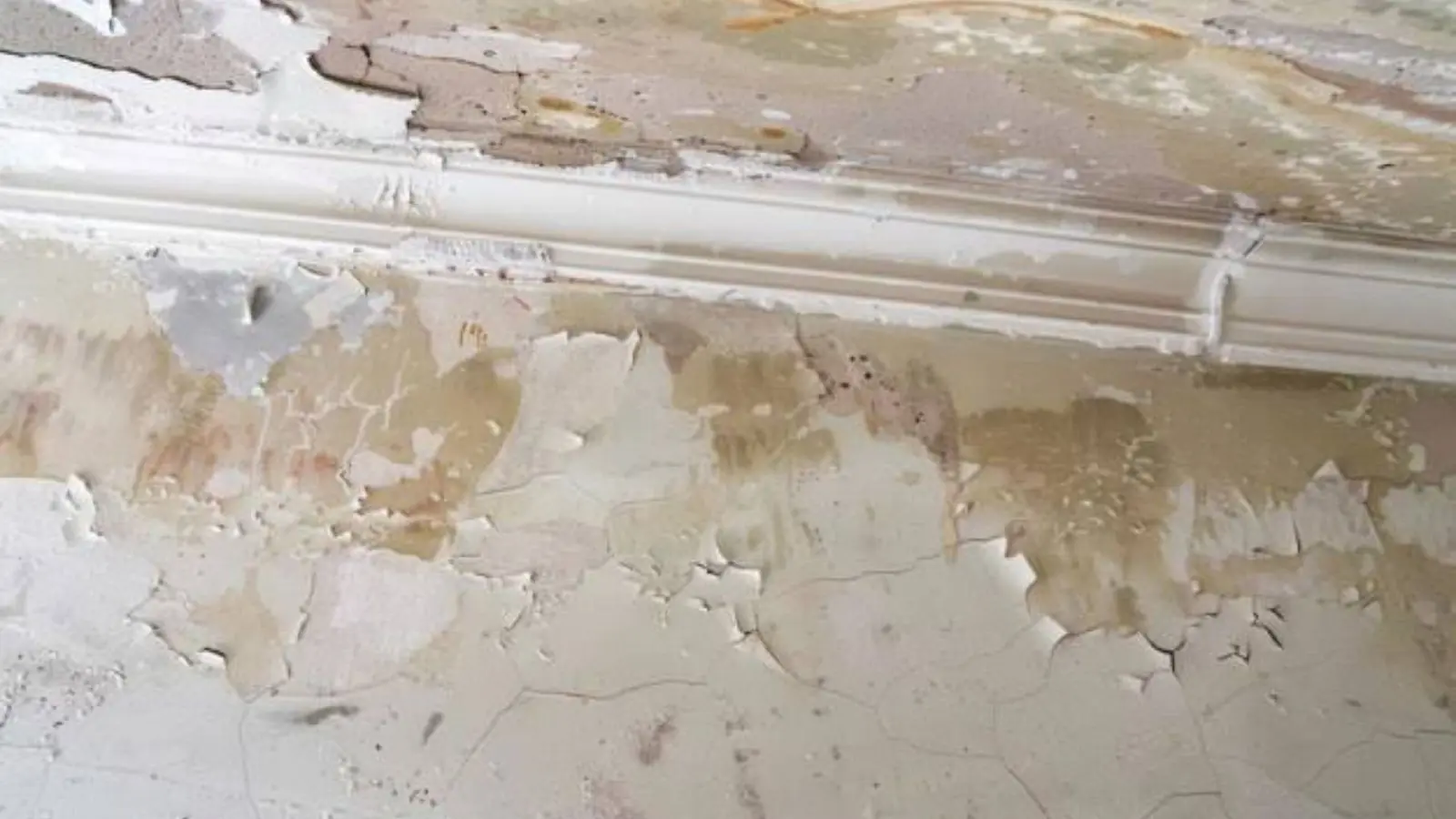
The Wall Hides Most of the Problem
When water reaches a wall, what you see is only the surface. Behind the paint sit paper faced drywall, insulation, studs, wiring and often a bottom plate resting on concrete. Each of those holds water differently, and the wall is not repaired until all of them are dry or replaced.
This post is about decisions. Which wall materials can be dried, which have to go, how far the cut needs to reach and when a wet wall means calling in help. Read it before you pick up a utility knife, since the first cut is the hardest one to undo.
What Is Inside a Typical Wall
| Layer | What water does | Usual outcome |
|---|---|---|
| Paint and primer | Bubbles, peels, shows brown rings | Repainted after repair |
| Drywall | Wicks upward, softens, can grow mold on the paper | Cut out if soft, stained or wet for long |
| Plaster and lath | Heavy, slow to dry, can detach from lath | Often dried if solid, cut if loose |
| Batt insulation | Holds water and loses value | Usually replaced |
| Wood studs and plates | Absorb water, then release it slowly | Dried in place and checked |
| Wiring and boxes | Corrode and short circuit | Inspected by an electrician |
Drywall deserves special attention. It wicks water upward, so the damp section is often taller than the visible stain. A wall that looks wet to the knee may be damp to the shoulder inside.
Clean Water, Gray Water and Sewage in a Wall
The source changes the decision. A clean supply line leak that is caught fast may let you dry drywall in place with holes drilled at the base. Gray water from an appliance calls for removal of porous material. Sewage or creek water in a wall means the board and insulation are removed, because they cannot be cleaned to a safe condition.
Category 3 water, the sewage category in industry terms, needs professional handling. Our water damage cleanup page describes what that involves, including protective gear and disposal.
Not sure how far the water went inside the wall?
Call dispatch and describe the stain, the source and how long it has been wet.
A Decision Path for a Wet Wall
Name the source and stop it
A wall will not dry while water still feeds it.
Measure, do not guess
A moisture meter or thermal camera shows how high and how far the water traveled.
Sort by material
Soft drywall, wet insulation and anything contaminated comes out. Solid board and framing stay if dry.
Open for airflow
Cut a clean line above the wet zone or remove baseboard and drill ventilation holes to dry the cavity.
Confirm dry before closing
Close the wall only when readings match a dry wall nearby.
Cutting a flood line a foot or two above the visible mark is common, since drywall holds moisture above the stain. A crew will do it with a clean line so replacement board fits tightly.
Wheat Ridge Local Note: Sewer Backup and Fruitdale
Fruitdale Sanitation District serves northwest Wheat Ridge, roughly from Ward Road to Kipling Street and from 44th to 52nd Avenue. Wastewater from that area is treated by the Metro Wastewater Reclamation District. If you live in that area and sewage backs up, the first call is to the district, since the blockage may be in the main and not your service line.
Backups reach walls through basement floor drains, utility rooms and laundry areas. Denver's handbook warns that federal flood cover excludes sewer backup. Ask your insurer whether a backup rider applies to your policy.
Mold in Walls and What to Do About It
Water that sits inside a wall cavity is a recipe for growth on the paper face of drywall. EPA guidance says moisture control is the key to mold control, and it says to fix the water problem or the mold returns. It also notes that porous materials with growth, such as drywall, are often discarded.
Visible mold rarely needs a lab test. For areas larger than about 10 square feet, or when growth appears inside the wall, review our mold remediation page. For anything about how mold affects people, talk to a physician.
Basement Walls and Concrete
Basement walls add a twist. Concrete and block hold water, so a framed wall inside can stay wet even after the leak stops. Check whether groundwater, a window well or a plumbing line is the source. A wall that gets wet after rain points to drainage, not plumbing.
Crawlspace walls follow the same logic. They often hide damp insulation and rusted fasteners. If you manage property in Denver, the Denver drainage complaint line can help with street side issues, and in Arvada sump discharge to the sanitary sewer is prohibited, which matters if a pump feeds a wet basement wall.
When Repair Is Not Enough
- The wall is bowed, soft or crumbling.
- Water came from sewage, a creek or a flood.
- Mold appears inside the cavity or on more than one wall.
- Wiring or a panel sits in the wet section.
- The wall stays damp after the source has been fixed.
Any of those is a sign to stop and get the wall assessed. Ask your insurer for instructions before repairs, and photograph the damage first, as the Colorado Division of Insurance advises.
Wet Wall FAQs for Wheat Ridge
If sewage backs up into a Wheat Ridge basement wall, who should I call first?
If you are in the northwest part of the city, call Fruitdale Sanitation District to check the main. Then call your insurer and a professional, because sewage in a wall means removal of porous material and protective handling.
Can wet drywall be saved?
Sometimes. Drywall that was wet briefly with clean water, stayed firm and can dry fully may be kept. Soft, stained or contaminated board should be cut out and replaced.
How high should the cut go on a wet wall?
Above the highest moisture reading, not just the visible stain. Drywall wicks water upward, so crews often cut a foot or two above the mark and confirm with a meter.
Does federal flood insurance cover sewer backup?
No. A separate sewer backup rider may apply, so check with your insurer before you assume anything.