
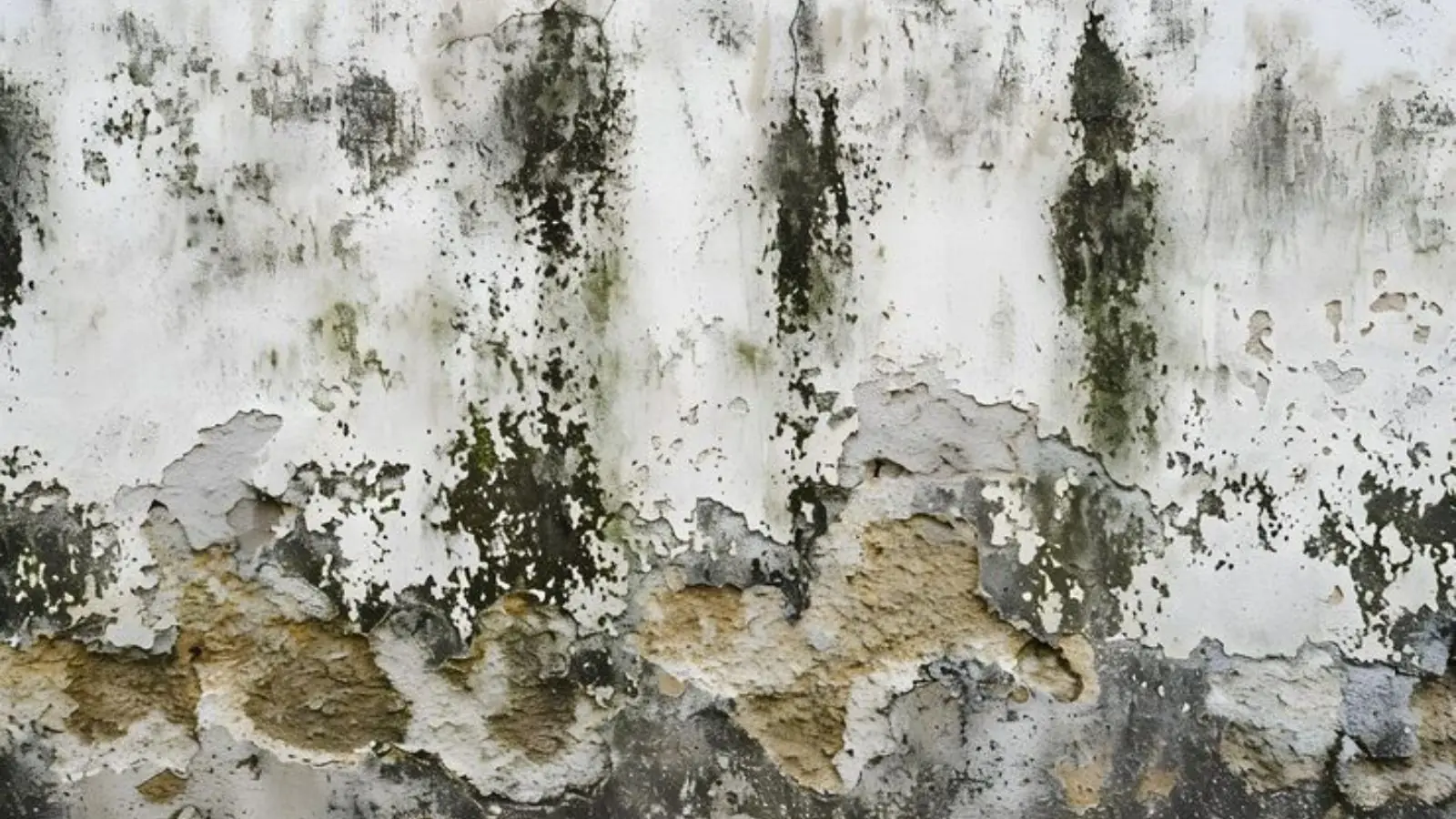
A Fair Answer Is: It Depends on the Surface
People ask what black mold looks like because they have found a dark mark and want to know if it matters. The honest answer is that mold varies a lot. It can be black, green, gray, brown, white or orange, and the same colony can change appearance as it ages or dries.
This page describes what growth tends to look like on common household surfaces, lists the stains that fool people, and explains why no photo guide, ours included, can tell you which species you have. It is a way to decide your next step, not a diagnosis.
Looks by Surface
Drywall and painted walls
Fuzzy or speckled patches, often in clusters, sometimes with a darker center. Paint may bubble or peel where the paper face stays wet.
Tile grout and caulk
Dark spots or lines along grout and the seam around tubs. The caulk often looks stained all the way through.
Wood framing and trim
Dark, powdery or web-like patches that follow the grain, sometimes with a musty smell and soft wood nearby.
Ceiling tile
Irregular rings or blotches, usually where a leak dripped, and often with sagging or brown edges.
Concrete and block
White crust is usually mineral. Dark growth shows up where dust and moisture sit together.
Carpet and pad
Spots on the underside of the carpet or pad, often noticed first as an odor.
Texture helps. Mold often looks slightly raised or fuzzy under a flashlight, while many stains are flat. Location helps too, since growth follows moisture and rarely appears on a dry, sunlit wall.
Look-Alikes That Are Not Mold
Many dark marks are not growth at all. A damp cloth is a fair first test, though it proves little. Dirt and soot smear and lift. Mold tends to smear less cleanly and leaves a shadow that returns.
| Mark | Typical clues |
|---|---|
| Dust and dirt | Wipes away fully, collects along air vents and corners |
| Soot or candle smoke | Black film above candles, fireplaces and vents, smears into streaks |
| Water stain | Flat tan or brown ring with a defined edge, no fuzz |
| Mineral deposits | White or gray crust around faucets, tubs and block walls |
| Rust | Orange or brown streaks below metal fasteners and pipes |
| Mildew on shower surfaces | Thin dark film that returns where the surface stays wet |
Not sure what you are looking at?
Call dispatch and describe the surface and how it looks.
Why Nobody Can Name It by Eye
Species identification takes laboratory analysis. Looking at color or texture will not separate one mold from another, and two different molds can look identical on the same wall. Federal guidance treats testing of visible growth as optional in most cases, since the response is the same.
Skip any website or video that claims it can diagnose from a photo. Health concerns go to a doctor. What a photo can do is help a crew judge the size of the problem before the visit.
What to Do After You Find It
Photograph it
Take wide and close shots with a coin or ruler for scale before touching anything.
Look for water
Check above, behind and below for a leak, a stained pipe or wet insulation.
Stay out of the dust
Do not sand, scrape or brush the area. Disturbed growth sends material into the air.
Measure roughly
Compare the area to a sheet of paper. EPA's guideline for homeowner cleanup is about 10 square feet.
Decide
Small and on a hard surface, clean with protective gear. Larger, porous or hidden growth needs a professional.
A mold remediation crew can take it from there with containment and removal under the S520 standard. If the growth traces to a leak or storm, water damage repair covers the drying and rebuilding.
Wheat Ridge Local Note: Water Source Questions
If a stain looks like a plumbing leak, the water itself is not the mystery. Six water providers serve Wheat Ridge and most of their supply comes from Denver Water, so check your bill to find which provider serves your address before calling about a service line or meter.
Sewage is a separate problem. Dark staining near a floor drain after a backup involves category 3 water, which needs professional handling. Neighbors weighing a similar mark in Arvada or Golden face the same question, and the answer is the same: find the water first.
Why Appearance Should Not Delay You
Waiting to decide what a mark is can cost more than acting. If the area stayed wet more than a day or two, treat it as a moisture problem even if the stain turns out to be harmless. Fix the water, dry the space and then judge what is left.
Ask your insurer what your policy covers, and keep your photos in one folder. The dates on them help any later conversation.
What Does Black Mold Look Like? Wheat Ridge FAQs
Who in Wheat Ridge can tell me what a dark patch is?
A restoration crew can judge size and moisture on site, but only a lab can name a species. For paid work in the city, ask about the contractor license and call the Building Division at 303-235-2855 with questions.
Does black mold always look black?
No. Color varies with species, age and lighting, and some molds that look black in shadow look green or gray in bright light. Color alone cannot identify a mold.
Is a dark spot on my ceiling always mold?
No. Water stains, dust, soot and rust can look similar. A flat tan ring with a clear edge is more often a stain. A fuzzy, spreading patch near moisture deserves a closer look.
Should I test it before calling someone?
Usually not, because visible mold is handled the same way whatever a test says. Photograph it, look for the water source and describe the area when you call.